
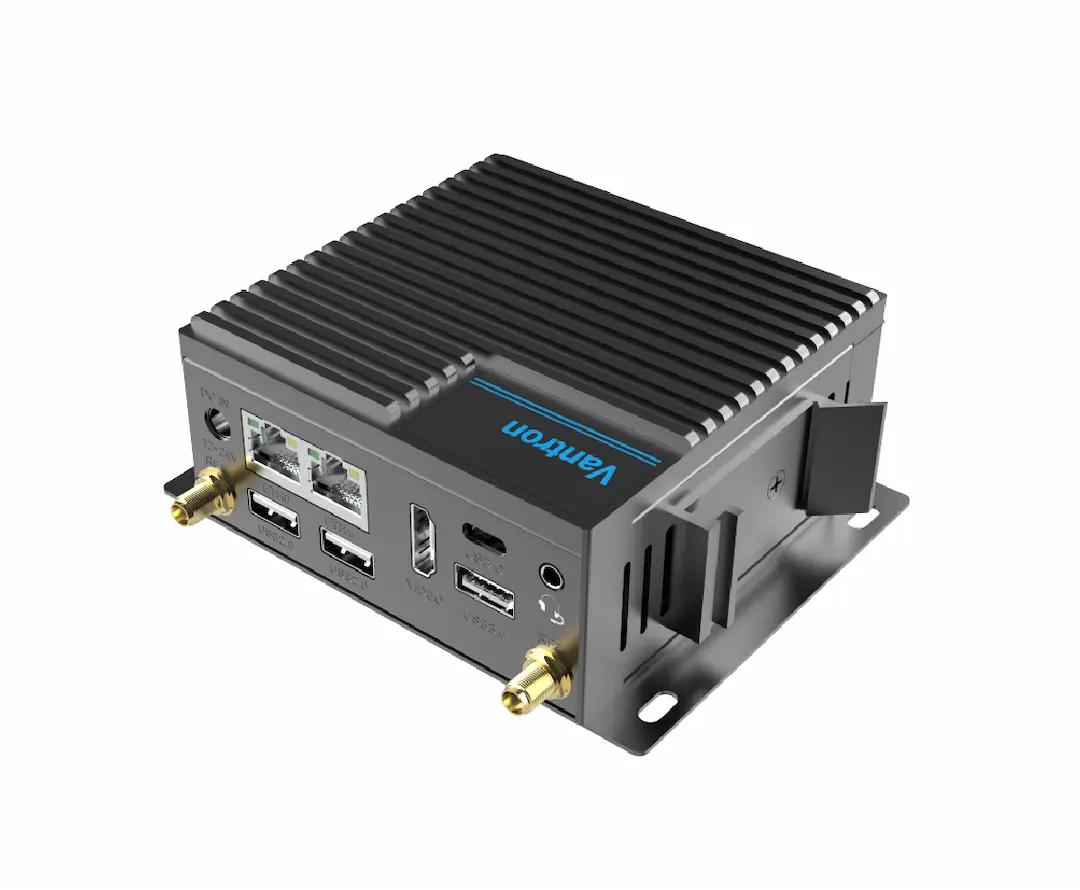
Industrial automation increasingly depends on processing data close to the machines that produce it. Sensors, cameras, robots, and controllers generate information that must be analyzed quickly and consistently. Sending every signal to a remote cloud can add latency and network traffic. Embedded industrial computers bring computing and analytics closer to equipment, helping manufacturers respond locally while staying connected to plant-level and cloud systems.
Why Edge Computing Matters on the Factory Floor
Industrial edge computing places selected workloads near the equipment or facility where data originates. A local computer can filter sensor readings, inspect images, identify abnormal patterns, and pass results to control systems or remote applications. This reduces unnecessary data transfers and can keep time-sensitive functions running when an external connection is unstable.
The cloud remains useful for fleet-wide analysis, centralized dashboards, model training, and long-term storage. The aim is not to replace cloud services, but to divide work based on response time, bandwidth, availability, and data policy.
This approach supports machine vision, material handling, and process monitoring. A vision station may need to classify a defect before the next part reaches the production stage. An autonomous mobile robot may need to process sensor inputs and coordinate movement without waiting for a distant server. These requirements shape hardware selection.
What Embedded Industrial Computers Contribute
Embedded industrial computers provide a dedicated platform for applications inside or alongside equipment. Depending on the design, they can prioritize compact installation, consistent interfaces, industrial I/O, power requirements, and dependable operation. Options may include finless cooling, multiple network interfaces, and local AI processing.
Engineers working on edge computing industrial automation should start with the workload rather than a processor label. A data collection node may need reliable serial and Ethernet connectivity more than advanced graphics. A vision system may require GPU or NPU acceleration, sufficient memory, and fast image access. A robot controller may depend on suitable I/O, communication, and validated software behavior.
The computer should have enough headroom for the application, but oversized hardware can raise price, power consumption, and thermal load without improving results. Workload profiling and prototype testing help establish the right balance.
Connecting Machines, Sensors, and Applications
Edge systems must exchange information with programmable logic controllers, sensors, cameras, drives, human-machine interfaces, manufacturing execution systems, and cloud platforms. Before choosing hardware, list required protocols, ports, data rates, and software interfaces.
Physical connectors are only one part of compatibility. Confirm operating-system support, drivers, SDKs, development tools, and necessary board support packages. Check how the application recovers after power interruption, reconnects after network outages, and handles invalid or missing data. These details influence the move from pilot to production.
For teams evaluating industrial embedded systems, Vantron’s portfolio includes categories such as Multimedia Box PC, Edge AI Box PC, and AGV/AMR Controller. Selection depends on processing, connectivity, mounting, and environmental requirements. Review each configuration’s specifications rather than assuming all models share the same interfaces or operating range.
Reliability, Thermal Design, and Lifecycle Planning
Factories can expose computers to vibration, dust, heat, electrical noise, and limited airflow. Document the environment before approving hardware. Review operating-temperature range, cooling method, power input, mounting options, and relevant shock, vibration, ingress-protection, or EMC information. A rugged enclosure alone does not prove suitability for every site.
Thermal performance is especially important for AI applications. Continuous inference can create a heavier load than basic data forwarding. Test the complete system at realistic ambient temperatures and utilization, including the enclosure and mounting arrangement. Finless cooling reduces moving parts but still requires effective heat transfer and adequate clearance.
Industrial equipment may remain in service for years, so buyers should ask about availability, configuration changes, component substitutions, and software or driver maintenance. Stable configurations can reduce redesign and revalidation costs across production batches.
Security and Remote Operations
Connected equipment creates more devices to secure and manage. Edge deployments should use access controls, secure configuration, timely updates, and network segmentation appropriate to the risk. Enable only required services and ports, and align remote access with organizational policy.
Remote monitoring can help teams review logs and investigate faults without immediately dispatching a technician. Management features vary, so confirm support for remote diagnostics, update workflows, health reporting, and recovery. Define what happens if a device loses connectivity or an update is interrupted.
Assess a supplier such as Vantron on documentation and engineering support as well as hardware. Clear technical materials and responsive assistance can shorten integration work, especially when projects combine custom software, industrial protocols, and multiple peripherals.
A Practical Evaluation Framework
Define the application, then record compute demand, memory and storage, network bandwidth, I/O, operating system, installation constraints, and environmental conditions. For machine vision or edge AI, benchmark the actual model and image pipeline instead of relying on a peak-performance figure.
Test compatibility and fault recovery with production devices. Review lifecycle expectations, warranty terms, software maintenance, and technical support. Compare total cost of ownership too: besides hardware price, account for engineering time, downtime, energy use, and future replacement effort.
Turning Edge Computing into an Operational Advantage
Edge computing in industrial automation requires more than moving workloads away from the cloud. It depends on a reliable local platform, compatible interfaces, appropriate thermal and mechanical design, and a clear maintenance and security plan.
Matching computing capability to the real workload and testing under representative conditions helps manufacturers build systems that respond locally and remain connected to wider operations. Reviewing the available options from Vantron can form part of that evaluation.