
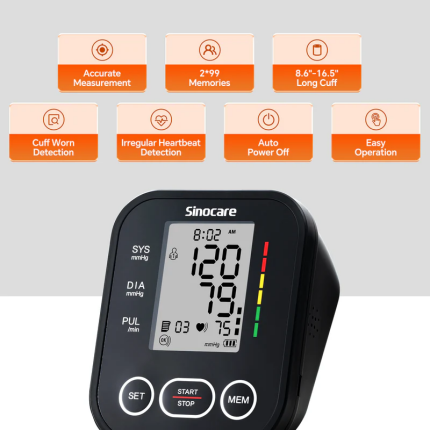
Monitoring blood pressure at home is a practical way to understand cardiovascular health over time. A blood pressure monitor measures the pressure of blood against artery walls during heartbeats and between beats, producing systolic and diastolic values. To monitor blood pressure correctly, readings should always be taken under calm and consistent conditions so that results reflect the body’s true baseline rather than temporary influences.
Preparing the body before measurement
Before using a blood pressure monitor, the body should be in a relaxed state. Sit quietly for at least five minutes, keep feet flat on the floor, and support the back against a chair. The arm should rest on a flat surface at heart level, and tight clothing around the upper arm should be avoided. These steps help reduce external factors that may distort readings and improve the reliability of the measurement process when using an upper arm blood pressure monitor.
How a Sinocare blood pressure monitor works in daily use
The Sinocare arm blood pressure monitor is designed for simple home monitoring with fully automatic operation. After wrapping the cuff around the upper arm and pressing a single button, the device automatically inflates, measures, and deflates without manual effort. It displays systolic pressure, diastolic pressure, and pulse rate on a large LCD screen for easy reading. The monitor also stores previous readings, allowing users to compare results over time and better understand changes in their blood pressure trends.
Building a Reliable Monitoring Routine
Learning how to monitor blood pressure effectively requires consistency rather than isolated measurements. Taking readings at the same time each day and recording results helps identify long-term patterns. With regular use of a blood pressure monitor like the Sinocare model, users can better observe how lifestyle factors such as stress, diet, and sleep affect their readings. Over time, this routine supports more informed health decisions and encourages proactive cardiovascular care.