
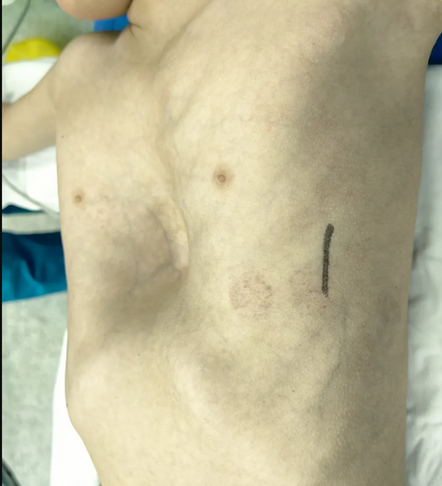
Many individuals born with a pectus excavatum deformity wonder if the skeletal depression is static or if it evolves over time. The effects of pectus excavatum generally worsen with age. In early childhood, pectus excavatum may have no noticeable effects, but as the child grows older, the degree of indentation deepens and the affected area increases.
Physiological Changes in Patients with Pectus Excavatum
Although this structural depression is usually present at birth, it often becomes more pronounced during the rapid bone growth of puberty. After puberty, due to bone calcification, the bony structures in the affected area of the chest become thicker and more robust. The heart may have insufficient space to function effectively within the restricted chest cavity, and therefore, the symptoms of pectus excavatum become more pronounced over time.
Specialized Surgical Solutions
Specialized treatment plans have also been developed to address the needs of different patients. The Wang procedure and the Wung procedure are specifically designed for these types of cases. The advantage of the Wang procedure is that it avoids operation within the thoracic cavity, thus preventing damage to the heart and lungs, making it more suitable for young children. The Wung procedure is modified on the basis of the Nuss procedure, incorporating numerous innovations and optimizations at every step, which significantly improves the effectiveness of the operation.
Clinical Expertise at ICWS
Addressing long-standing chest wall problems requires a high level of surgical expertise and treatment plans tailored to individual anatomy. The Institute of Chest Wall Surgery (ICWS) offers advanced surgical solutions for various chest wall deformities. Through these techniques, the surgical team can provide consistent treatment results and help patients regain their health.