
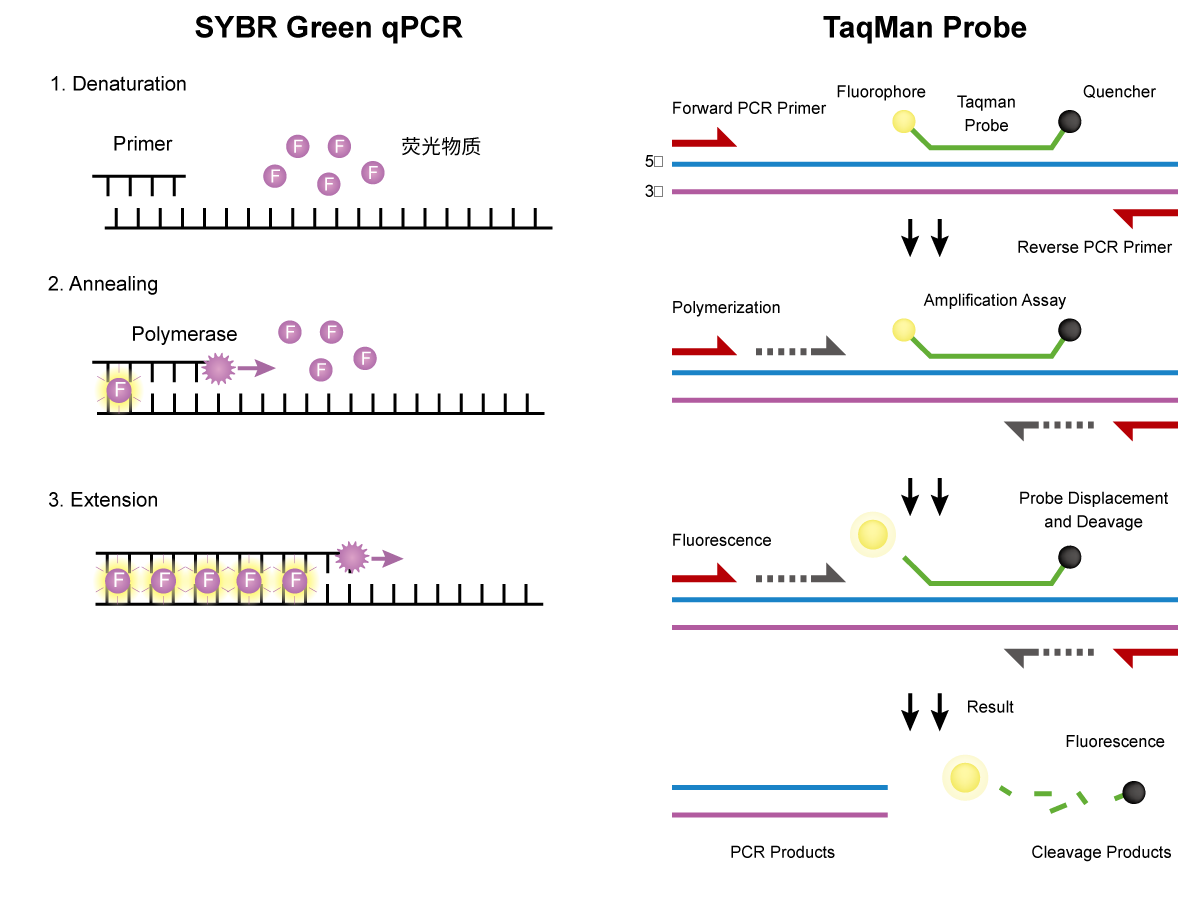
A reliable Synbio Technologies workflow depends heavily on the purity of the probe used during quantitative PCR. When discussing factors that influence a low Ct value, the purity of the probe becomes essential because it directly affects the qPCR Probe Fluorescence Signal. Impurities can interfere with the reaction environment and influence how efficiently the probe interacts with the target sequence. When probes contain unintended fragments or incomplete syntheses, they may generate background noise that complicates the amplification curve. This reduces the clarity of the fluorescence signal, making it harder for the system to detect true amplification events in the early cycles.
How Purity Influences Fluorescence Output
Probe purity plays a critical role in ensuring that the qPCR Probe Fluorescence Signal remains stable and consistent throughout the reaction. In high-purity probes, the reporter and quencher behave predictably, so the release of the fluorescence signal aligns more closely with actual amplification. However, when impurities are present, the probe may degrade prematurely or fail to separate efficiently, resulting in inconsistent fluorescence output. They emphasize that maintaining structural integrity is vital for precise signal generation, especially in assays requiring accurate detection of low-copy targets. This consistency supports more dependable Ct readings, allowing the amplification curve to rise sharply once the target accumulates.
Implications for Achieving Low Ct Values
A lower Ct value reflects an efficient amplification process, and probe purity directly contributes to achieving that outcome. When the probe is manufactured with high purity, the true fluorescence response appears earlier in the reaction because signal noise is minimized. Conversely, impurities can delay threshold detection, pushing the Ct value higher than expected. They highlight that probe quality is a foundational factor influencing both sensitivity and reaction uniformity. Their product information explains how proper probe design and manufacturing conditions help maintain a strong and distinguishable fluorescence profile, which supports early and accurate detection thresholds. By reducing background variation and improving signal clarity, high-purity probes allow the system to differentiate true target amplification from nonspecific activity. This results in a more reliable interpretation of early-cycle signals, ultimately helping laboratories obtain consistent and dependable Ct measurements across different experimental conditions.
Conclusion: The Central Importance of Probe Purity
In summary, probe purity plays a defining role in determining whether a low Ct value can be achieved consistently. High-purity probes promote a clean qPCR Probe Fluorescence Signal, reduce baseline interference, and generate a clearer fluorescence signal during amplification. These factors allow the detection system to recognize target accumulation at earlier cycles, supporting more dependable Ct values. As part of their expertise, Synbio Technologies outlines how controlled synthesis and careful probe evaluation contribute to stable and predictable qPCR performance.